
An option we install regularly.
We install solar-powered attic exhaust fans from Attic Depot in Conroe. The panel supplies solar power to the fan, which helps move air out of the attic when operating.
The installation needs to suit the home. We look at available intake, existing exhaust, attic design, and roof conditions before recommending a unit. Placement and roof flashing are part of the installation—not details to leave until the end.
If your upstairs feels hot or you have noticed attic moisture, tell us what is happening. We’ll discuss whether ventilation is part of the issue and explain the proposed work.
Discuss your attic ventilation ↗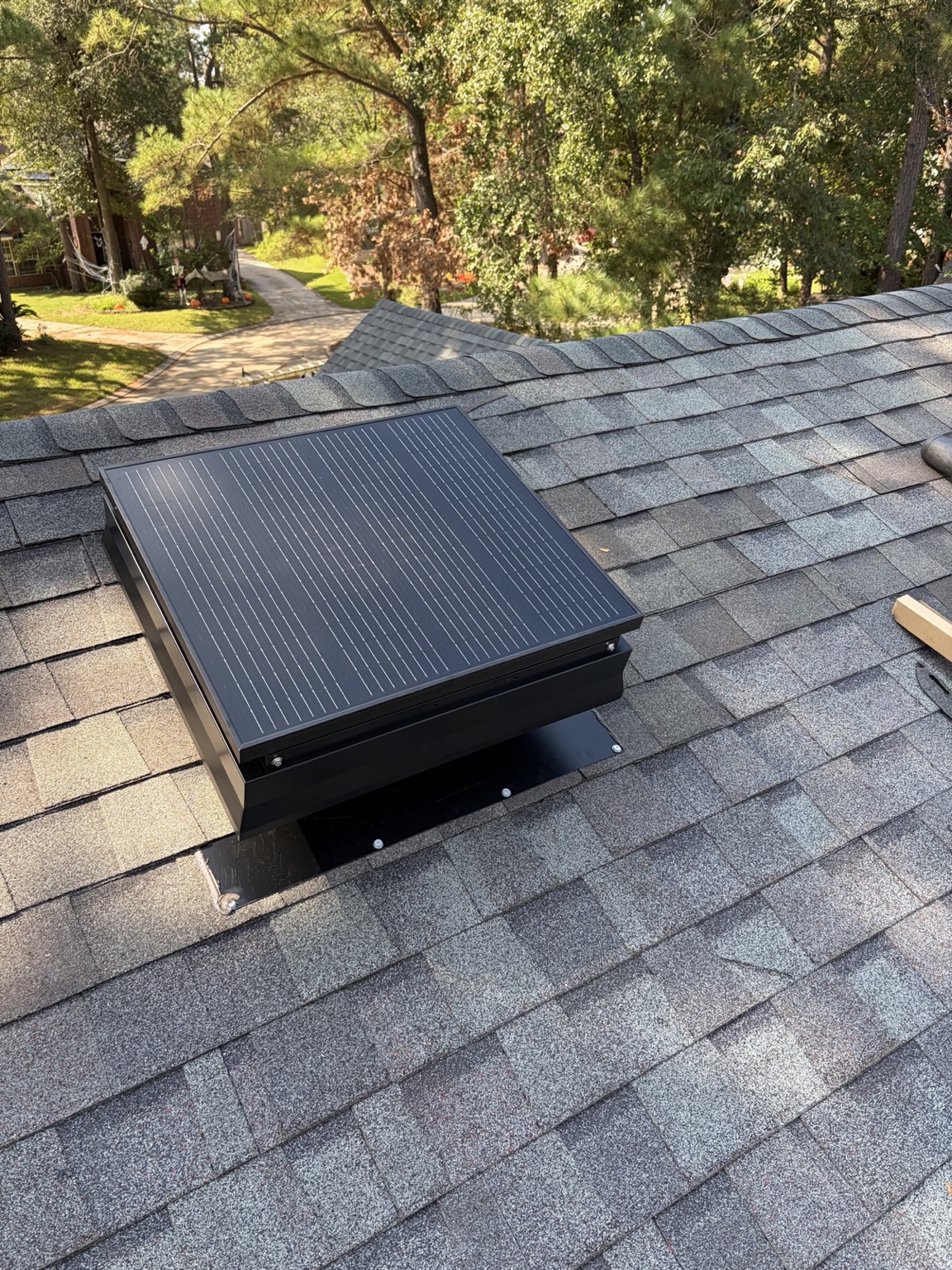
A closer look at the work.
Start with the symptoms
Rooms that are difficult to cool, moisture observations, and premature roofing wear can justify a closer look. They do not establish ventilation as the only cause. Tell us what you are noticing so the evaluation starts with the actual concern.
Review the attic assembly
A conventionally vented attic and a deliberately unvented conditioned attic require different approaches. We consider the existing design before discussing changes. In a vented assembly, intake, exhaust, and clear airflow paths need to work together.
Consider other moisture and comfort factors
Roof leaks, air leakage, insulation, bath exhaust, and HVAC equipment can affect attic conditions. Adding vents is not a substitute for finding the source of a problem. Some findings may need attention from the appropriate trade alongside roofing work.
Discuss solar-powered options when appropriate
We regularly install solar-powered attic exhaust fans from Attic Depot in Conroe. When a fan is appropriate for the home, we review the unit, placement, roof integration, and available intake airflow as part of the recommendation. Solar power alone does not establish that a powered fan is the right solution for every attic.
Fit the work to the project
Ventilation improvements may be part of a roof replacement, a repair, or a standalone scope. We explain the proposed change and how it is intended to work with the existing system. Energy and comfort results vary by building; we do not promise a universal percentage reduction in bills.
An intake option when soffits are missing.
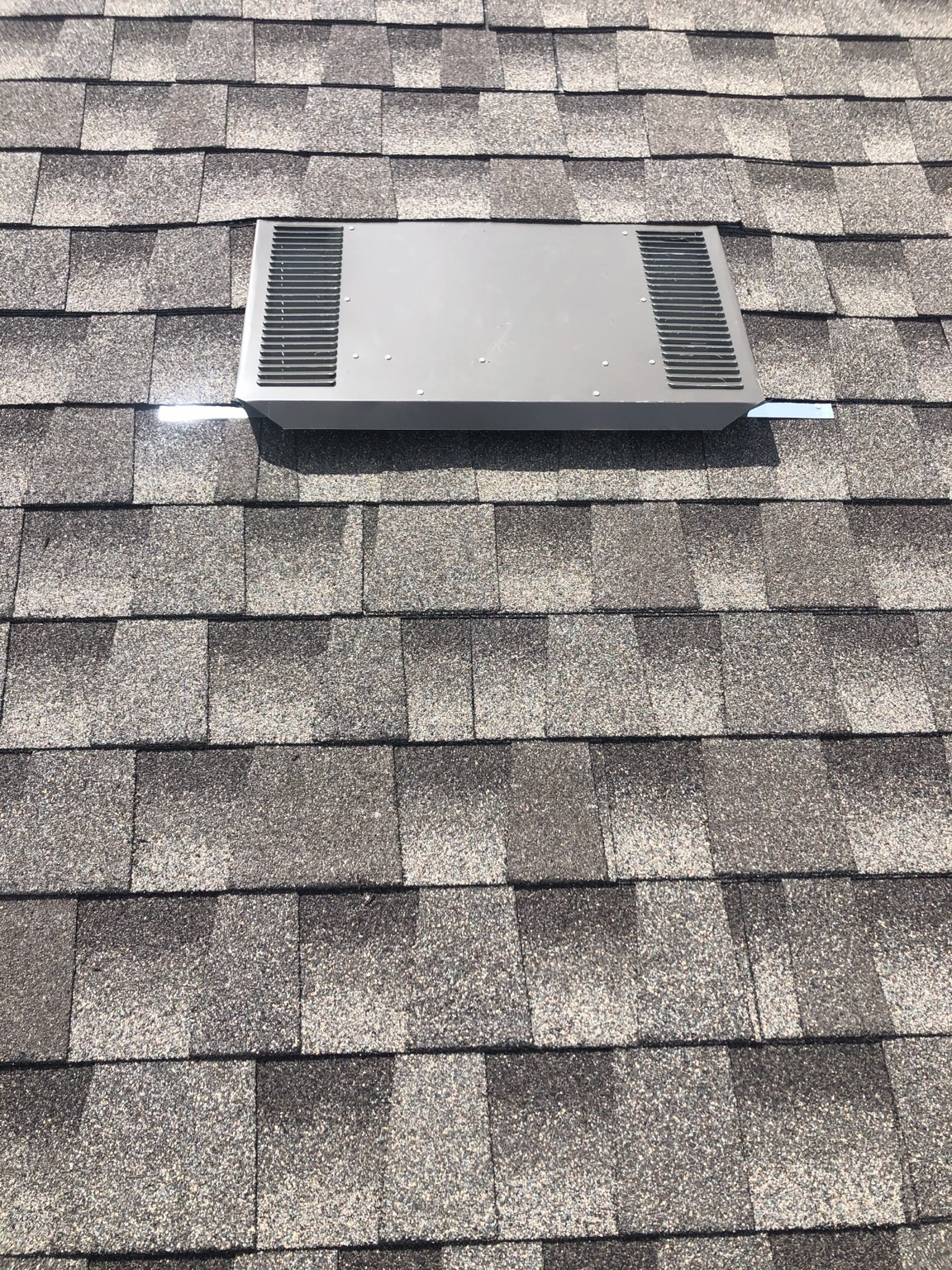
We install O’Hagin low-profile vents for exhaust and, in suitable designs, as roof-mounted intake when a home does not have soffits or an appropriate soffit intake path.
The location matters. Intake needs a suitable path for air to enter lower in the system, while exhaust is planned higher on the roof. We assess the attic layout, available intake, existing exhaust, and the product’s installation requirements before choosing the arrangement.
A low-profile vent can provide a less prominent roof appearance while still serving a defined role in the ventilation plan. We explain which role the proposed vents will perform and how they fit with the rest of the system.
Before you decide.
Should I just add another exhaust vent?
Not without evaluating the design, available intake, and existing exhaust arrangement. More openings do not automatically make a better system.
Can ventilation fix every attic moisture problem?
No. Moisture may involve roof entry, indoor air, equipment, or other sources. The recommendation should follow the cause, not only the symptom.
Let’s talk about your roof.
Tell Patrick what you’re seeing. We’ll discuss the next step.